

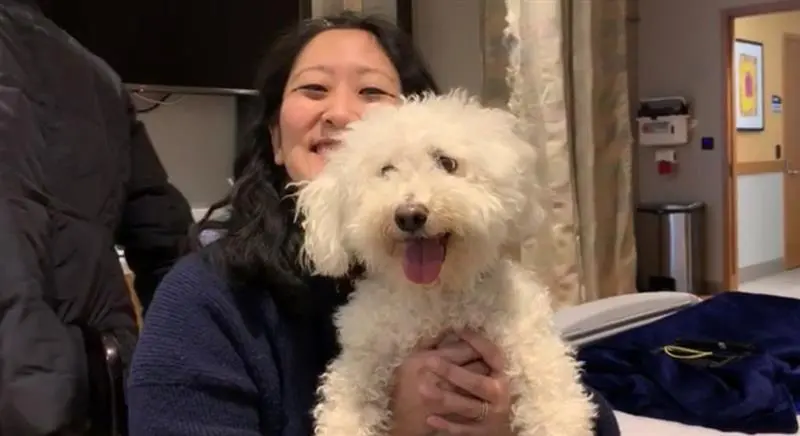
I work in compliance on the mortgage side at Lument, where I’m the liaison to multiple agencies, including HUD and Freddie Mac. I help ensure various Lument entities comply with the rules, regulations, and guidelines of USDA and other government-sponsored enterprises. I also handle certain reporting for the Home Mortgage Disclosure Act and the USA Patriot Act.
I wrote a book about my recovery journey, SUPERSURVIVOR, that was published last November. The title references a particular type of survivor – whether they’ve had a stroke or are dealing with cancer, or another chronic illness – that has overcome intense odds and maintained not only a positive attitude, but also a very determined one. Simply put, they refuse to accept that their situation has taken their life out of their control. Returning to work played a large part in allowing me to regain control of my life.
Surviving a major health crisis changed my perspective on my career. My job is highly technical. It’s a challenge in a really good way and it provides me with a true sense of accomplishment. But I used to equate my job very strongly with my identity – in my mind, everything I had accomplished professionally helped define me. After my stroke, I realized that there’s more to life than just being great at your job. Time is such a precious commodity, and we’re given such a limited amount of it. When something life-altering happens, you look back and wonder whether you’d really spent your time in the way that you wanted.
Now I understand now that life is a balance, and that if I don’t take breaks – if I keep pushing myself and keep being stubborn – then my body will punish me for it. It’s more of a marathon than a sprint. Now, if I’m waiting for a deliverable, instead of sitting at my computer until it arrives – like I’d done before my stroke – I’ll change gears and unload the dishwasher, since I work from home, then return to my computer. I’ve learned that those little breaks really help my cognitive function.
In terms of professional accomplishments, I’m really proud that I’ve consistently improved my processes, retooled them to get my work done efficiently, and meet my deadlines ahead of schedule. I’ve gotten really good at time management and strategizing.
One of the biggest gifts I’ve received was getting to work for Kevin Mainelli and Lument. Kevin was incredibly supportive when the stroke happened and during my recovery. When I returned to work, he would always notice if my speech was slurred, or my cognition was a little off – he said he could see it in my eyes, and he would make me stop working for the day. Sometimes I was headstrong and said I was fine, but I so appreciated that he would look out for me and be so caring as a boss. I can’t say enough good things about how amazing he was. And so many other colleagues, too, like Danielle MacKenzie in payroll at OCU, who helped me with my time sheets when I was on long-term disability. Everyone was so supportive and kind.
Speaking of workplace support, I write in my book about the changes I’d like to see in the world, especially about supporting those who return to work after a life-altering health event. I now understand how looks can be very deceiving. When I tell people I’ve had a stroke, many almost don’t believe me. They’ll say I look so healthy and vibrant, like nothing ever happened. They don’t understand how I lost mobility on the entire left side of my body and the ability to walk. They’ll say, “But your gait is fine now.”
I’ve come to recognize how ableism can show up in everyday expectations around performance, even after a serious health event, and how critical empathy and flexibility are in those moments. It’s very easy for people to revert to thinking that my mind works just as perfectly as it did before the stroke, but there’s actually a lot of adjusting I need to do. There are many other people with illnesses or challenges who are also navigating the workplace, and they’re afraid to ask, or don’t want to call attention to themselves, much like I didn’t when I returned to work. I’d like to create awareness and sensitivity around this topic, and the minor adjustments that can have a big positive impact. For example, providing rest areas where people can sit in a dark room for 10 minutes or resources to help people maintain their energy levels can go a long way. I’d love to see these kinds of small adjustments implemented on a larger scale in workplace environments.
I mentor college students and people in various roles at different stages of their careers, and there’s a lot of guidance I would give to my Lument colleagues who are just starting out. First and foremost, try to never stop learning – absorb as much as you can. If you find a great mentor, take advantage of it. There are plenty of people in the company who want to support the younger generation. Lument’s Associate Development Program (ADP) is a great, successful example of the company’s efforts to cultivate young talent.
I’d recommend keeping tabs on your short- and long-term goals. It’s easy to get caught up in the day-to-day, but if you try to consistently evaluate what you’re doing, those efforts will eventually pay off. Most importantly, try to make time to pursue your personal interests, even just a little bit. You’ll feel so fulfilled, and it will open your world.
On that same subject, something that people may not know about me is that I love music and attending concerts. I was a radio station DJ in college, and I volunteered to sell merchandise at concert venues in Philadelphia. I got to meet so many artists, and I loved it! I also earned a Professional Certificate in General Music Studies from the Berklee College of Music a few years ago. I’d always wanted to work in the music industry, and it let me dabble a bit in that world. It also allowed me to prove that the stroke didn’t set me back – I could still be me and accomplish things. I took a rock and pop vocals class and an introduction to the music business, and I’ve gone on site for a couple of days each summer to take classes in person. It was so much fun.
I’ve been asked why I decided to write a book about my experience. I began writing a blog about stroke recovery about three months after my stroke, with the goal of running the Broad Street Run in Philadelphia from the perspective of someone who couldn’t walk a few months earlier. When I was told that I shouldn’t run it, the blog became more about recovery in general – what I was going through, the various mental challenges, the isolation, etc. When I first started looking at survival rates of a hemorrhagic stroke, the five-year rate was 26.7%. A lot of things happened in my life at the end of those five years. At that point, I’d gone back to work full-time and received a promotion. I’d also done peer mentoring with other stroke patients, who asked me so many questions, and told me I was able to express and describe feelings, symptoms, and side effects in a way they couldn’t verbalize. I decided to share that story because I’d passed the five-year milestone and it seemed like the right time.
The process of turning my journey into a book and trying to explain to healthy people what it’s like being sick – from both a physical and mental perspective – was quite a challenge, but also absolutely therapeutic. It helped me learn the lessons I needed faster, in ways I wouldn’t have thought about had I not been writing a book. It also helped me process what happened to me and see the big picture in so many ways.
You can learn more about Judy’s journey by following her on Instagram @judykimcagetheauthorpage and by ordering her book SUPERSURVIVOR here.



