

When Lument was formed in 2020 through the merger of three well-established multifamily lenders—RED Capital Group, Hunt Real Estate Capital, and Lancaster Pollard—the path to consolidation seemed straightforward. Within a matter of weeks, however, the COVID-19 pandemic upended expectations and rendered the playbook obsolete. Leadership was challenged with the task of forging a unified culture, integrating systems and departments, and rightsizing the organization—all while steering through uncharted economic territory. At the same time, they moved to broaden their range of products and solutions to meet the evolving needs of investors in a rapidly shifting market.
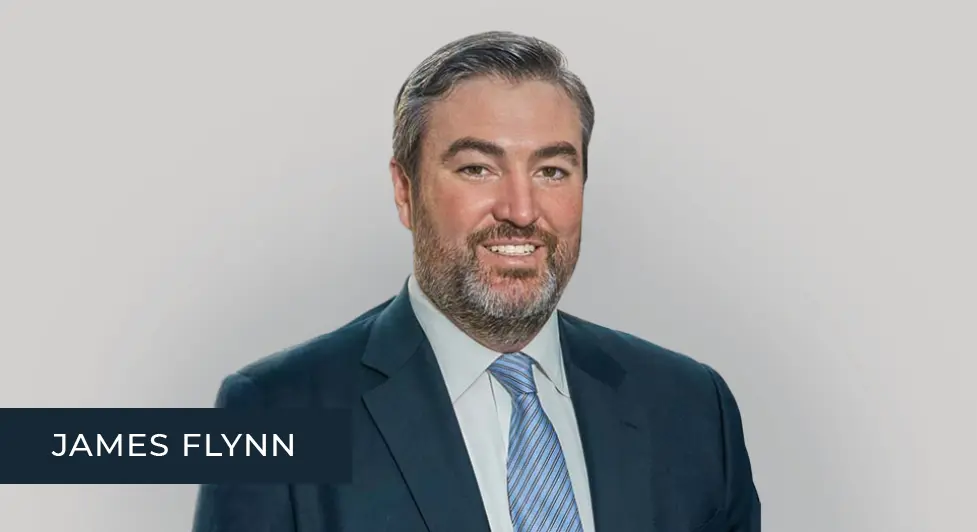
Five years later, Lument is now a top-tier provider of agency, Federal Housing Administration, and balance sheet financing, and has more recently expanded into investment sales and capital markets. CEO Jim Flynn reflects on lessons learned from guiding the organization through its formative years—insights that may prove valuable to investors and industry leaders as they look ahead to the next five.
What are some tactics that are effective in bringing people together and creating a unified culture?
Because we were trying to build a single organization and culture at the same time we sent everyone home to work, we had to think creatively about maximizing internal communications to help people feel connected and informed. We upped the cadence of firmwide townhalls and launched several internal publications to reach employees. They included profiles of people from across the company as well as a series putting a human face on the leadership team. We also made sure that everyone had the tools in their home offices needed to collaborate effectively.
These efforts were instrumental in merging the identities of our three predecessor entities into a single vision for Lument. It also illustrated the power of internal communications and supporting people in ways that matter to them. That’s important regardless of circumstances.
How do you find and retain the top talent needed to strengthen and grow a company while making sure that existing employees are comfortable with more collaborative models?
The keys are culture and opportunity. You build a convincing case for the potential of your organization’s business model and demonstrate to new and old employees alike that it opens possibilities for reward and advancement not available from an organization tethered to the status quo. Gathering a team of individuals who believe in your vision for growth and recognize the opportunity it creates for them strengthens your culture and increases your likelihood for success.
At the same time, you need to institute incentives that demonstrate that collaboration is in everyone’s best interests. This is particularly important in an industry that attracts a lot of strong personalities. In addition, making time for one-on-one interactions is critical not only to building relationships but also to understanding where you can refine or expand your plan.
What have been your biggest accomplishments over the past five years?
I am going to take a high-level approach to this question. For me, it’s been building a respected organization recognized not just for the quality and impact of its services but also its breadth. I can’t overestimate the value of this. Establishing this kind of reputation has meant actively cultivating our brand and our culture, finding people of character who are both ambitious and collaborative, anticipating the range of solutions our clients need, and finding ever better ways to deliver them.
What did you learn about managing through change, including the post-pandemic economic volatility and the downcycle that followed?
We don’t get to choose our economy. In our business, you naturally lean in on risk management during uncertain times, but you also can’t retreat into your shell and hope things are going to get better. One thing we learned was that uncertainty, not necessity, is the mother of invention. It inspired us to reassess market needs, investigate new lines of business, and go after the talent needed to achieve our new business model.
How have the financing needs of multifamily borrowers changed over the last five years?
Although they are gradually moving onto the same page, buyers and sellers have approached the market with fundamentally incompatible expectations in the past few years. Sellers are naturally anchored to historical valuations, while buyers are feeling the weight of higher interest rates and rising construction and operational expenses.
As a result, we have seen the proportion of our lending shift from acquisitions to refinances. But in both cases, borrowers have often had to assemble a more extensive capital stack and become more creative in developing transactions that will pencil out.
More recently, groups that have been on the sidelines are selectively returning, driven not only by an expectation that rates have generally stabilized, but also by internal rate of return models tied to forecast rent growth in supply-constrained markets. On the refinance side, we’ve seen a recent trend toward longer loan durations on the agency side from five years to seven years—another positive sign for the market.
How has that affected your approach to offering finance?
Creativity, market insight, and efficiency are paramount for lenders in a market in which opportunities can be hard to spot, and buyers need to react with speed and precision when they do arise.
Achieving these ideals in today’s market means offering a variety of products like preferred equity and mezzanine financing in addition to permanent loans. It requires investment sales to surface opportunities for both buyers and sellers, and it means providing full capital market services for investors seeking alternative financing options. Success today requires firms to do more and be more.
How have renter preferences evolved since the pandemic, and how have they affected the market?
Before the pandemic, renters—especially young renters—preferred central business districts in major metros. The pandemic saw them move to suburbs and secondary and tertiary markets. They also migrated to the Sun Belt, which saw a massive construction boom. More recently, renters have been eyeing the more affordable Midwest markets and have also begun returning to central business districts in gateway cities.
These shifts must be seen in the larger context. There remains a severe shortage of affordable, well-maintained, and comfortable housing in this country. Because homeownership is more costly than ever, renters are expected to stay in the market longer—keeping demand high. For perspective, average rent and new mortgage costs were roughly equal at $1,200 in 2020. Today, the average new mortgage cost is over $2,200, while rents have increased to $1,500. The challenge our industry faces is how to build and finance new units at a reasonable cost.
Has the long-anticipated new normal finally arrived?
The new normal has been gradually arriving while we were expecting a more dramatic breakthrough. We are not quite there, but we’re on track. The market is stable, and demographics are strong. Even after peak construction deliveries, rent growth seems sustainable in most markets and is now a possibility for even the most oversupplied markets. In some regions, we are beginning to see sellers transact below pricing levels they were targeting as recently as a year ago. This signals that period described as “extend and pretend,” “survive to ’25,” or other similarly frustrating labels is in the process of ending.
The one missing piece to higher transaction volume is that institutions are largely still on the sidelines. Most active buyers now are wealthy investors, family offices, and some investment funds looking for longer holds. When the institutions return, I think we can fairly say that the new normal has arrived.
This article first appeared in Multifamily Executive.



