Execution speed now matters as much as cost of capital in today’s senior housing and skilled nursing landscape. Owners and operators are prioritizing certainty as they navigate volatile markets, tighter operating margins, and more selective credit.
In this environment, the U.S. Department of Housing and Urban Development/Federal Housing Administration’s Section 232 LEAN program remains a critical source of long-term, fixed-rate, non-recourse financing. For many borrowers, it continues to offer a level of stability that is difficult to replicate in conventional markets.
Fiscal year 2025 marked an active year, with nearly $6 billion in insured healthcare loan volume, reflecting both heightened demand and improved execution efficiency.
What has changed is how the program works in practice. Recent updates are improving timelines, clarifying underwriting and expanding flexibility, while Opportunity Zone dynamics and stronger front-end planning are helping borrowers position deals more effectively before they enter the HUD process.
These changes are not incremental. They are improving how HUD transactions move from application to execution. Here’s how that plays out.
Inside the Express Lane: Faster execution for lower-risk deals
In June 2025, HUD introduced the Express Lane to accelerate processing for lower-risk Section 232/223(f) transactions.
The program focuses on refinances of stabilized senior housing and skilled nursing properties. It does not change underwriting standards. Instead, It streamlines the process for transactions that demonstrate strong performance metrics.
Preparation drives speed
To qualify, borrowers must meet clearly defined criteria. Most importantly, applications must be complete and ready to underwrite at submission.
This requirement separates faster execution from delays.
A meaningful shift in timelines
Speed serves as the primary benefit, as qualifying transactions move through underwriting and firm commitment significantly faster than traditional timelines. Some deals now complete key stages in weeks rather than months. Conversely, traditional processing often extends to 90 or 120 days, especially when issues surface mid-process.
The Express Lane represents a meaningful shift in strategy. While borrowers have historically viewed HUD as stable but relatively slower, this new path changes that perception. For well-prepared transactions, HUD now competes on both certainty and timing, providing a critical advantage in a volatile market.
Increased efficiency coincides with a robust lending platform. At the program level, HUD projected approximately $6 billion in insured healthcare loan volume for residential care facilities and hospitals in its FY 2027 Congressional Budget Justification. High lending activity reinforces the program’s role as a primary capital source for the sector.
The takeaway is straightforward. HUD is not easier, but it is more predictable and efficient for lower leverage, higher debt service coverage deals.
Opportunity zones and front-end strategy
Opportunity Zones do not change HUD underwriting. They influence how deals are capitalized and structured before submission.
In practice, they shape how borrowers build the capital stack before entering the HUD process. HUD has continued to prioritize these transactions as well, including a separate shorter queue for underwriting rather than the traditional queue which has historically been longer.
Strengthening the capital stack
The Opportunity Zone program, established under the Tax Cuts and Jobs Act of 2017, was designed to direct long-term private capital into designated communities. The program has attracted more than $100 billion in private investment since inception, according to the Economic Innovation Group.
For senior housing, this creates a meaningful opportunity. Opportunity Zone equity often comes with longer investment horizons. Investors are incentivized to hold assets for extended periods, which aligns well with the operating profile of senior housing and skilled nursing facilities. This can improve capital stack durability and reduce pressure on near-term performance.
It also provides flexibility in how deals are structured before they reach HUD.
Why front-end diligence matters more
More broadly, Opportunity Zone dynamics reinforce the importance of front-end diligence.
HUD execution is highly dependent on preparation. Environmental risks, flood exposure, quality-of-care metrics and site-specific factors all play a role in underwriting outcomes. When these issues are identified early, borrowers and lenders can address them proactively rather than reactively.
That reduces execution risk and improves timeline certainty. HUD currently recognizes 8,764 Opportunity Zone census tracts, with the existing map in place through 2028. A future designation cycle is expected to extend the program, which may continue to shape capital flows into qualifying areas.
Opportunity Zones do not guarantee faster approvals. They improve how deals are positioned before entering the process.
In a program where documentation and structure drive outcomes, that distinction is critical.
Expanded FHA flexibility: More ways to structure and execute
HUD is also expanding how borrowers can use the Section 232 program to meet today’s capital needs, including an increase in allowable rehabilitation scope. HUD has increased the scope within certain Section 232/223(f) transactions from 15% to 25% of post-repair value, expanding flexibility for qualifying deals.
This change is particularly relevant for aging properties. Many assisted living and memory care communities require ongoing upgrades to remain competitive. Incorporating those improvements into a HUD execution reduces the need for separate financing and simplifies the capital structure.
Borrowers are also using HUD more broadly in refinances. Transactions can include lease-up costs, working capital and prior capital expenditures that meet program requirements. This allows borrowers to consolidate multiple capital needs into a single, long-term financing solution.
How this works in practice
In practice, that can improve both efficiency and predictability. In a recent example, we closed a $21.2 million FHA Section 232/223(f) Express Lane refinance for Pemberly Place Senior Living, a senior housing community in Lincoln, NE, with 120 apartment units and a licensed capacity for 132. We obtained a firm commitment from FHA only seven days after application submission and subsequently proceeded to a seamless closing. The FHA loan has a fixed interest rate and 35-year term. It paid off bank debt and reimbursed the borrower for previous capital expenditures.
This type of execution flexibility is changing how borrowers evaluate HUD relative to other capital sources. It is also reshaping how transitional assets move into permanent financing.
Flexibility on supplemental income sources
HUD continues to refine underwriting guidance around supplemental income sources. In recent LEAN 232 communications, the agency has indicated that certain supplemental revenues in both Texas and Indiana may be considered in loan sizing on a limited basis, while maintaining standard debt service coverage requirements.
This approach reflects a consistent theme: HUD is expanding flexibility while maintaining underwriting discipline.
What this means for today’s market
Taken together, these developments point to a clear shift in how Section 232 operates. The program is becoming more practical for today’s market conditions.
The Express Lane improves execution speed and predictability. Opportunity Zone dynamics support stronger capital formation and better front-end positioning. Expanded FHA flexibility allows borrowers to address a wider range of capital needs within a single financing structure.
At the same time, underwriting remains disciplined. That balance is what defines the current environment. Borrowers who prepare thoroughly can move more efficiently through the process. Lenders who identify risks early can reduce delays and improve execution outcomes. Capital structures can be aligned more closely with current operating realities.
Execution is no longer just about closing a loan. It depends on how effectively the deal is built before it reaches underwriting.
Positioning for what comes next
HUD is becoming more usable for borrowers who understand how to navigate it.
Execution timelines are shorter. Guidance is clearer. Structural flexibility is improving in ways that directly impact deal feasibility and timing.
These changes do not lower standards. They increase the value of preparation, discipline and experience. For senior housing and skilled nursing owners, the path forward is clear: Prepare early, structure deals carefully, and work with partners who understand both the program and the market environment.
Those who do will be better positioned to secure long-term capital with greater certainty and move efficiently as market conditions continue to evolve.
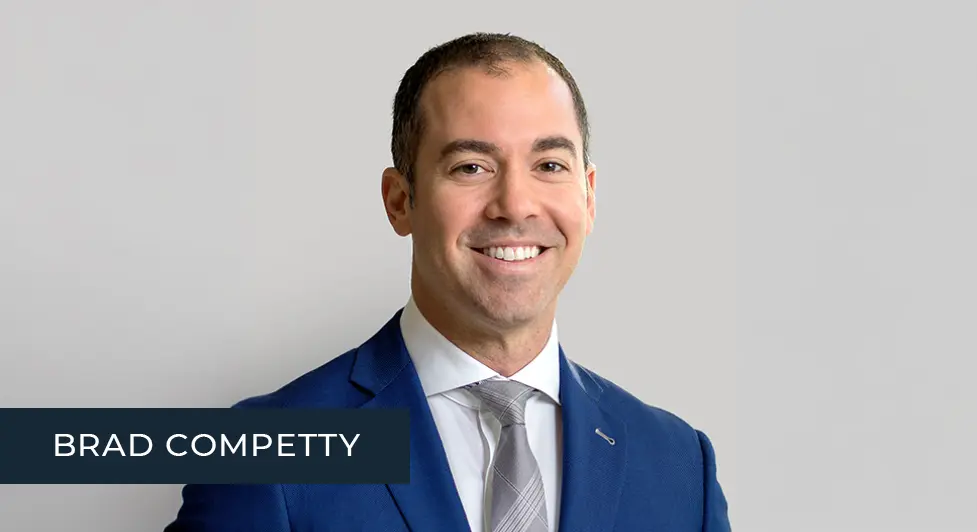
Brad Competty is a senior director at Lument. He helps lead the firm’s origination efforts for seniors housing and healthcare clients throughout the Midwest.
This article originally ran in McKnight’s Long-Term Care News.
faqs based on this article
In many acquisition and lease-up scenarios, a property doesn’t meet HUD’s stabilization requirements yet, which is where bridge-to-HUD financing comes in. A short-term bridge loan funds the acquisition or renovation, giving the property time to stabilize before refinancing into a long-term Section 232 loan. Lument funds these transactions directly through its own balance sheet lending platform, commonly used for skilled nursing properties. Ask about bridge-to-HUD options through Lument’s Seniors Housing & Healthcare team.
HUD 232 isn’t the only path to long-term, fixed-rate financing. Fannie Mae and Freddie Mac both have dedicated seniors housing programs that generally close faster than HUD, typically with shorter amortization and some recourse. The right fit depends on property type, timeline, and how much an owner values HUD’s non-recourse structure versus a faster close. Compare Fannie Mae and Freddie Mac senior housing programs, or talk to a Lument specialist to weigh all three.
Lument has more than 35 years of experience financing seniors housing and healthcare properties, including independent living, assisted living, memory care, and skilled nursing. Its team understands the sector’s complex regulatory, licensing, operational, and reimbursement environments, including Medicare/Medicaid models and operator cash flows. With FHA LEAN expertise, as well as agency and balance sheet financing options, Lument can provide tailored loan structures and efficient execution based on each borrower’s needs. Talk to a seniors housing specialist today to explore your options.